
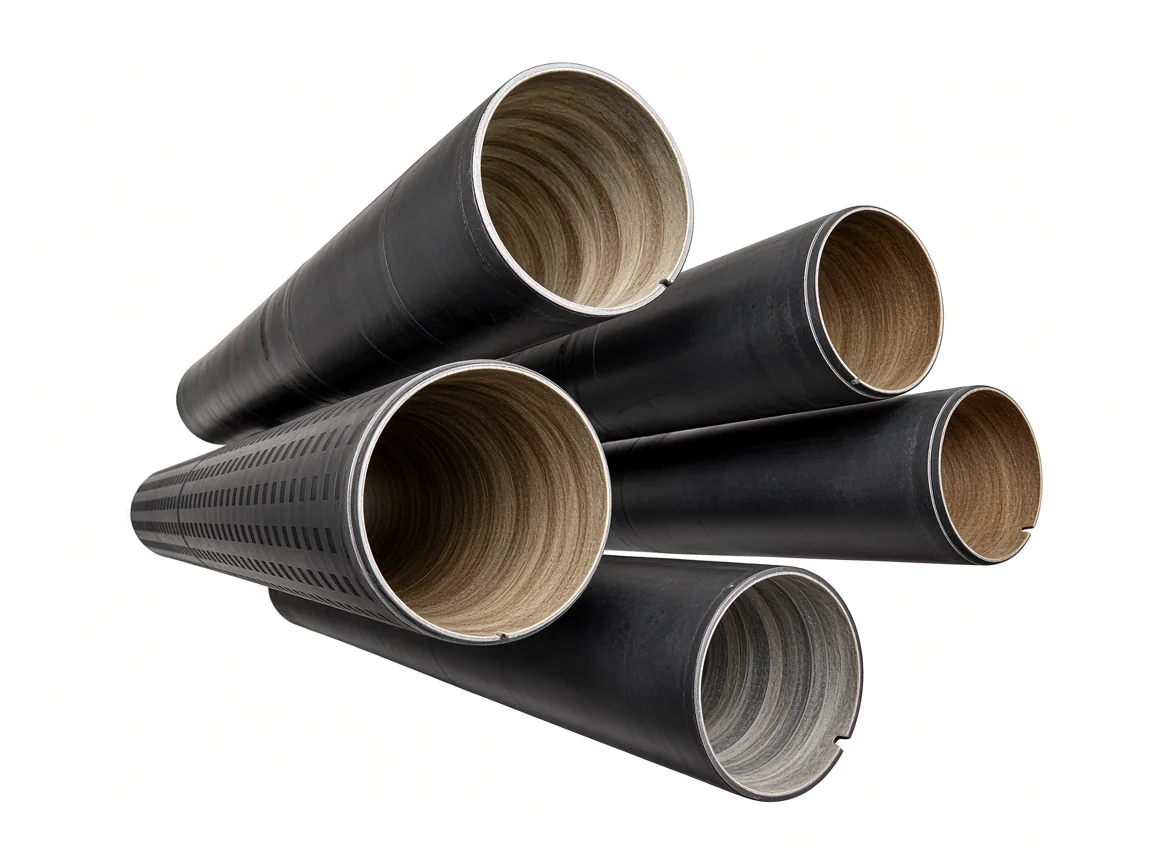
Print sleeves to your repeat
Specified by repeat, BCD, wall, and face length, and built to take the mounting tape and plate you run. Send a drawing if you have one.
A sleeve is tooling. Get the repeat, base circle diameter, wall, or face length wrong, and the plate will not land where the job file says it should.
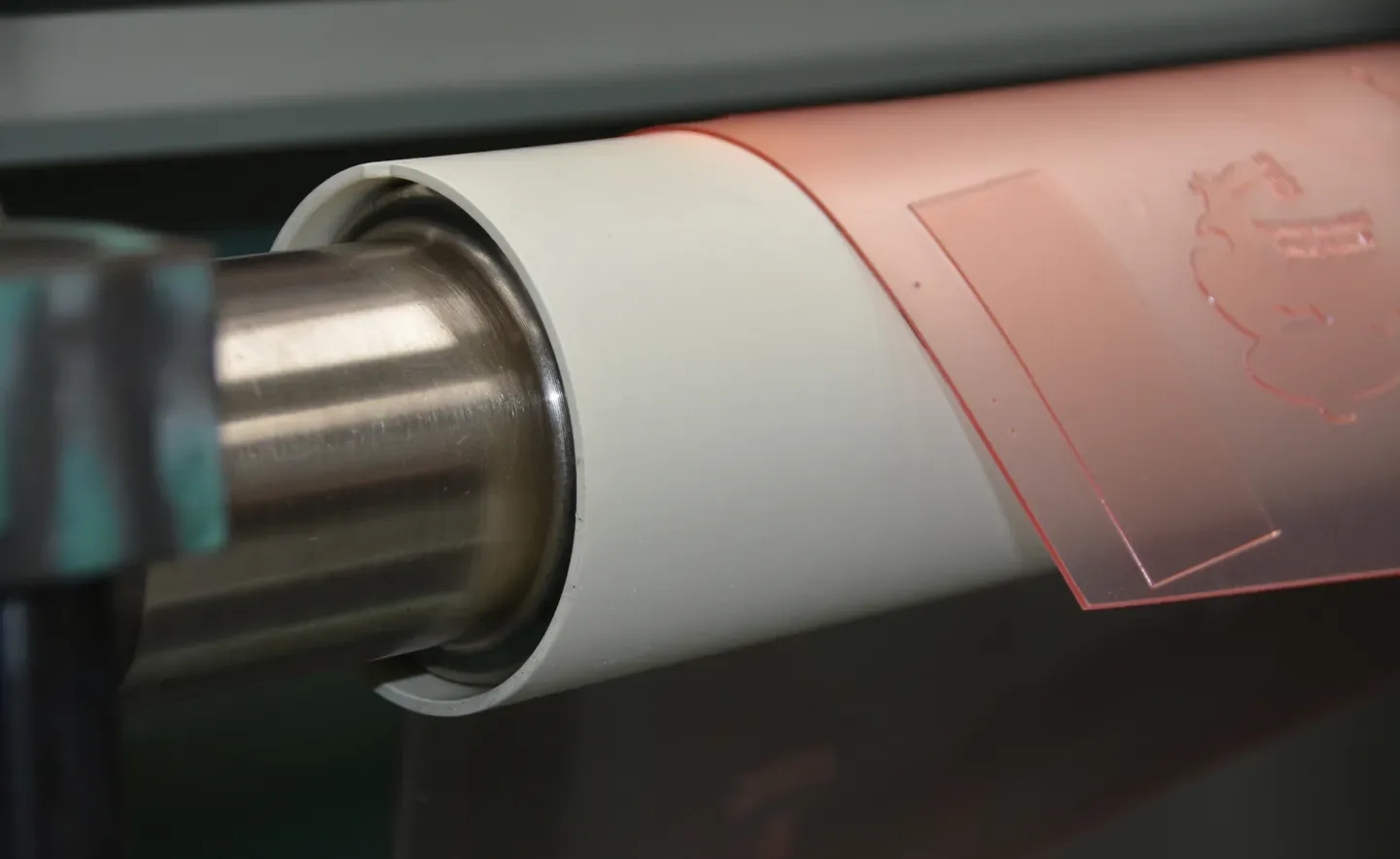
Plate sleeves — also called print sleeves — carry the photopolymer plate on a repeating surface that mounts to a mandrel or a bridge. The geometry has to match the press: repeat, base circle diameter (BCD), wall thickness, and face length, plus the tape and plate you’ll build on that sleeve.
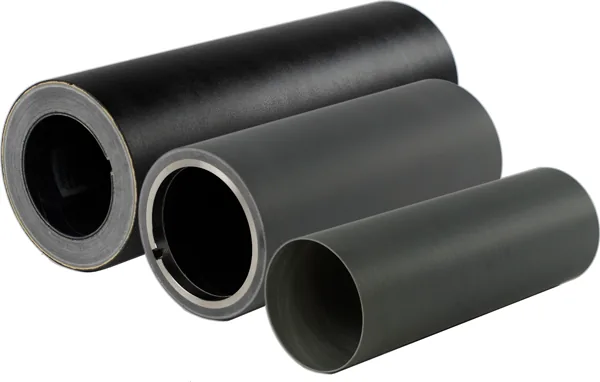
We quote lightweight sleeves in the constructions pressrooms actually run, including thin walls around .020" when that is the system, and we’ll take the tape and plate thicknesses into the build-up — for example tape at .015" and plate at .067" when those are your standards.
If a sleeve is worn, we can talk through resurfacing from the sleeve in hand. Send the drawing or the stencil data if you have it.
Specified by repeat, BCD, wall, and face length, and built to take the mounting tape and plate you run. Send a drawing if you have one.
Tell us the tape thickness and the plate thickness so the finished print diameter matches what the prepress file expects.
If a sleeve is worn, cracked, or out of round, we’ll help you decide whether a resurface or a new sleeve is the right quote.
Yes. Send the specification or a drawing, and we’ll quote the sleeve you need.
Yes. Send the drawing or a used sleeve — that’s the cleanest way to match notches, air holes, and face length.
Tell us the tape series and thickness, and we’ll confirm the combination when we quote.
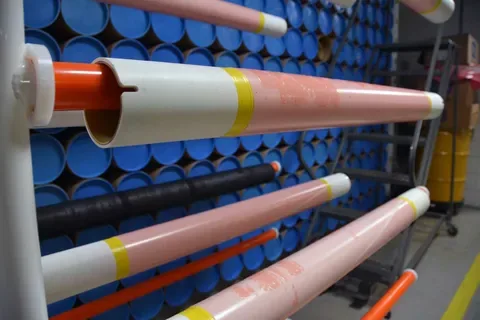
Handle sleeves on a clean surface, with the ends protected, and don’t stand a thin-wall sleeve on a dirty floor. When you demount, use the air as designed — forcing a sleeve off a dry mandrel is how cracks start.
Share the plant, the sizes, and what you’re running. Our customer service team will follow up.